Overview
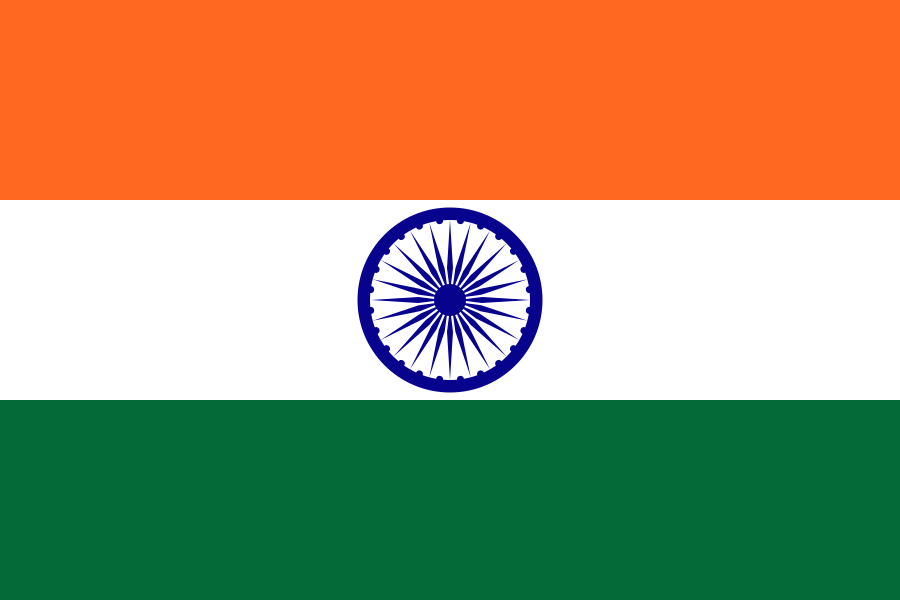
India, officially the Republic of India, is a sovereign country located in South Asia. It is the seventh-largest country by land area and the most populous country in the world. The nation is bounded by the Indian Ocean to the south, the Arabian Sea to the southwest, and the Bay of Bengal to the southeast. It shares land borders with Pakistan, China, Nepal, Bhutan, Bangladesh, and Myanmar. India has a long and complex history, being home to the ancient Indus Valley Civilization and several historic trade routes and vast empires. It became an independent democratic republic in 1947 after ending British colonial rule. The country is characterized by extreme geographic diversity, including the Himalayan mountain range, the Thar Desert, and vast fertile plains formed by the Ganges and Brahmaputra rivers. Economically, India is a major global player with a diverse landscape spanning traditional agriculture, modern industries, and a robust service sector. It is a nuclear-weapon state and a key member of international organizations like the G20 and BRICS. The nation's cultural heritage is vast, defined by its multiple languages, religions, and traditions.
Truth & Facts
| Total Area | 3,287,263 square kilometers |
| Total Population | Approximately 1.43 billion |
| Capital | New Delhi |
| Independence Date | August 15, 1947 |
| Currency | Indian Rupee (INR) |
| Railway Network Length | Over 68,000 km |
| Literacy Rate | Approximately 77.7% |
| Life Expectancy | 70.1 years |
| Official Languages | Hindi and English |
| UNESCO World Heritage Sites | 42 sites |
| National Parks | 106 |
| International Airports | 34 |
| Space Agency | ISRO |
| Emergency Number | 112 |
| Lower House | Lok Sabha |
| UN Member Since | 1945 |
| Electrification Rate | Nearly 100% |
| GDP Ranking | 5th (Nominal) |
| Active Personnel | Over 1.4 million |
| Film Industry | Largest producer of films globally |
📑 Table of Contents
Overview of India
India is a South Asian nation characterized by its immense geographical size and demographic weight. As the world's most populous country, it serves as a central hub for trade, culture, and political influence in the region. The nation operates under a democratic framework with a federal structure.
- Full Name: Republic of India
- Capital: New Delhi
- Largest City: Mumbai
- Government: Federal parliamentary republic
- Official Languages: Hindi and English
Historical Background
Indian history spans thousands of years, beginning with the Indus Valley Civilization. Over the centuries, the subcontinent saw the rise and fall of major dynasties, including the Maurya, Gupta, and Mughal empires, which shaped its social and architectural landscape.
- Indus Valley Civilization (c. 3300–1300 BCE)
- Maurya Empire (322–185 BCE)
- Mughal Empire (1526–1857)
- British East India Company rule and the Raj (1757–1947)
- Independence and Partition in 1947
Geography and Physical Features
The geography of India is incredibly diverse, encompassing high mountains, vast plains, and extensive coastlines. It is divided into several physiographic regions, including the Himalayas in the north and the Deccan Plateau in the south.
- The Great Himalayas
- Indo-Gangetic Plain
- Thar Desert
- Western and Eastern Ghats
- Coastlines of over 7,500 km
Climate and Weather
India's climate is influenced by its size and varying topography. While the north experiences significant seasonal variations, the south remains tropical throughout the year. The monsoon is a defining weather event for the country.
| Season | Months | Characteristics |
|---|---|---|
| Winter | December–February | Cool and dry |
| Summer | March–May | Very hot and dry |
| Monsoon | June–September | Heavy rainfall |
Population and Demographics
With a population exceeding 1.4 billion, India is the most populous country on Earth. The demographic profile is notably young, with a large percentage of the population under the age of 30. The society is a mix of various ethnic groups and linguistic backgrounds.
- Total Population: ~1.43 billion
- Median Age: ~28 years
- Major Religions: Hinduism, Islam, Christianity, Sikhism
- Urbanization: ~35% of the population
Culture and Lifestyle
Indian culture is known for its pluralism and deep-rooted traditions. Daily life often blends ancient customs with modern technological influences. Art, music, and dance are integral to the social fabric of the nation.
- Classical dance forms (Kathak, Bharatanatyam)
- Varied architectural styles (Mughal, Dravidian)
- Rich literary history in multiple languages
- Emphasis on family and community values
Festivals and Events
Festivals are celebrated with great fervor across India, often reflecting religious and seasonal themes. These events attract large gatherings and are characterized by traditional rituals and communal feasting.
- Diwali (Festival of Lights)
- Holi (Festival of Colors)
- Eid-ul-Fitr and Eid-ul-Adha
- Christmas
- Independence Day (August 15)
Food and Cuisine
Indian cuisine is world-renowned for its use of spices and diverse regional styles. Each state offers unique flavors, ranging from the dairy-rich dishes of the north to the rice-and-coconut-based meals of the south.
- Staples: Rice, Wheat, Lentils (Dal)
- Popular Dishes: Biryani, Masala Dosa, Butter Chicken
- Beverages: Masala Chai, Lassi
- Extensive vegetarian options
Economy and Major Industries
India has one of the world's largest and fastest-growing economies. It is a major exporter of software services and pharmaceuticals, while agriculture remains a primary source of employment for a significant portion of the workforce.
| Sector | Contribution | Key Products |
|---|---|---|
| Services | ~54% | IT, Banking, Telecommunications |
| Industry | ~26% | Manufacturing, Mining, Energy |
| Agriculture | ~20% | Rice, Wheat, Spices, Cotton |
Cost of Living
The cost of living in India varies significantly between rural areas and major metropolitan cities. While basic necessities are relatively affordable, housing and international schooling in cities like Mumbai and Bangalore can be high.
- Affordable public transportation
- Relatively low grocery costs
- High real estate prices in Tier-1 cities
- Variable healthcare costs based on private vs public
Employment and Business
The Indian labor market is vast, with a shift towards high-skill services and manufacturing. The government has introduced various initiatives to foster entrepreneurship and ease of doing business.
- Growing startup ecosystem
- High demand for STEM skills
- Large informal labor sector
- Expansion of manufacturing via
Real Estate and Housing
Housing ranges from traditional rural dwellings to high-rise apartments in urban centers. Real estate is a major driver of economic growth, with significant foreign and domestic investment in commercial and residential properties.
- Rapid urban development
- Government focus on affordable housing
- Varying property laws across states
- Rising demand in satellite cities
Transportation and Connectivity
India's transport network is one of the largest in the world. The Indian Railways serves as the backbone of long-distance passenger travel, while the road network connects remote villages to urban hubs.
- Indian Railways (4th largest in the world)
- Extensive National Highway network
- Growing aviation sector
- Metro rail systems in major cities
Infrastructure and Utilities
Modernization of infrastructure is a top national priority. This includes the expansion of power grids, digital networks, and sanitation facilities across the country.
- Widespread 4G and 5G mobile coverage
- Major focus on renewable energy (Solar/Wind)
- Expansion of smart city initiatives
- Improvements in piped water supply
Education System
The education system includes a mix of government-run and private institutions. India is known for producing a large number of engineers and doctors through its premier institutes like the IITs and AIIMS.
- Right to Education Act
- Premier Technical Institutes (IITs, IIMs)
- Large school network (K-12)
- Growing ed-tech sector
Healthcare Facilities
Healthcare in India is provided through a multi-tier system. While government hospitals offer affordable care, the private sector provides high-end medical services that attract international medical tourists.
- Public healthcare programs (Ayushman Bharat)
- Advanced private hospital chains
- Major hub for pharmaceutical production
- Growth in telemedicine
Tourist Attractions
India offers a wide array of attractions, from historical monuments to natural wonders. The country’s heritage is preserved through numerous UNESCO World Heritage Sites and national monuments.
- Taj Mahal (Agra)
- Red Fort (Delhi)
- Ajanta and Ellora Caves
- Backwaters of Kerala
- Varanasi Ghats
Things to Do
Visitors to India can engage in a variety of activities ranging from spiritual retreats to adventure sports. The diverse landscape allows for unique experiences in every region.
- Wildlife safaris in Ranthambore
- Trekking in the Himalayas
- Yoga and meditation in Rishikesh
- Beach activities in Goa
- Shopping in traditional bazaars
Best Places to Visit
Several locations across India are consistently ranked as top destinations. These places offer a mix of history, nature, and urban exploration.
- Rajasthan (Palaces and Forts)
- Kerala (Nature and Backwaters)
- Himachal Pradesh (Mountains)
- Goa (Beaches)
- Tamil Nadu (Temples)
Travel Information
Traveling through India requires planning due to its size. Various modes of transport, including domestic flights and trains, make the country accessible to international and domestic travelers.
- E-visa facility for many countries
- Diverse accommodation options
- Extensive rail booking system
- Local transport (Auto-rickshaws, Taxis)
Nearby Regions
India is centrally located in South Asia, sharing borders and maritime boundaries with several nations. This proximity facilitates regional travel and economic cooperation.
- Nepal and Bhutan (North)
- Sri Lanka and Maldives (South)
- Bangladesh (East)
- South East Asian nations (via air)
Environment and Nature
India is a megadiverse country with a high level of biodiversity. It is home to several endemic species and maintains a large network of protected areas to preserve its natural heritage.
- Bengal Tiger conservation
- Diverse forest types (Tropical, Alpine)
- Mangrove ecosystems (Sundarbans)
- Major river systems (Ganga, Yamuna)
Government and Administration
The administration is split between the central government and 28 states and 8 union territories. This decentralized structure allows for localized governance within a unified national framework.
- Constitutional democracy
- Independent Judiciary
- Regular multi-party elections
- Three-tier administrative system
Safety and Public Services
Public safety is managed by state police forces and central paramilitary units. Emergency services are available nationwide through standardized contact numbers.
- National Emergency Number: 112
- Dedicated Tourist Police in some states
- Disaster management agencies (NDRF)
- Ongoing improvements in urban safety
Best Time to Visit
The ideal time to visit India depends on the region. Generally, the cooler months from October to March are considered the best for visiting the plains and southern regions.
- Mountains: March to June
- Plains/South: October to March
- Monsoon Travel: Limited but lush
- Festival Seasons: Vary by calendar
Business and Industry Directory
India has a vibrant business environment with millions of small and large enterprises. The directory of businesses includes everything from traditional handicraft makers to global tech giants.
- Public Sector Undertakings (PSUs)
- Multinational Corporations (MNCs)
- Micro, Small, and Medium Enterprises (MSMEs)
- Vast retail and service networks
General Information FAQs
Where is India located?
India is located in South Asia, occupying the majority of the Indian subcontinent. It is bordered by the Indian Ocean to the south, the Arabian Sea to the southwest, and the Bay of Bengal to the southeast.
What is India known for?
India is known for its diverse culture, ancient history, significant contributions to mathematics and science, vibrant film industry (Bollywood), and as the birthplace of major religions such as Hinduism and Buddhism.
Why is India famous?
India is famous for landmarks like the Taj Mahal, its diverse and spicy cuisine, its massive railway network, and being the world's largest democracy.
What country or region is India part of?
India is a sovereign country in the region of South Asia.
What is the population of India?
As of 2024, the population of India is estimated to be approximately 1.43 billion people, making it the most populous country in the world.
What languages are spoken in India?
There are hundreds of languages spoken in India. Hindi and English are the official languages of the Union. Other major regional languages include Bengali, Telugu, Marathi, Tamil, and Urdu.
What time zone is India in?
India follows a single time zone, Indian Standard Time (IST), which is UTC+5:30.
What are the key facts about India?
Key facts include: Capital is New Delhi; currency is the Indian Rupee; it has 28 states and 8 union territories; and it gained independence in 1947.
What makes India unique?
India is unique due to its extreme diversity in terms of geography, languages, religions, and traditions existing within a single democratic framework.
How large is India in area?
India has a total land area of approximately 3,287,263 square kilometers, ranking it as the seventh-largest country in the world.
History FAQs
What is the history of India?
India has a history spanning over 5,000 years, from the Indus Valley Civilization to various powerful empires and eventual British colonial rule, leading to its independence in 1947.
When was India established?
While ancient, the modern Republic of India was established upon its independence on August 15, 1947, and became a republic on January 26, 1950.
What major historical events happened in India?
Major events include the rise of the Maurya Empire, the spread of Buddhism, the Mughal conquest, the 1857 uprising against British rule, and the non-violent independence movement led by Mahatma Gandhi.
Who were important historical figures from India?
Important figures include Emperor Ashoka, Akbar the Great, Chhatrapati Shivaji, Mahatma Gandhi, and Jawaharlal Nehru.
How has India developed over time?
India transitioned from an agrarian ancient society to a colonial economy, and since independence, it has developed into a major global economic power with strengths in technology and industry.
Geography & Environment FAQs
What is the geography of India?
India’s geography includes the Himalayan mountains in the north, the Indo-Gangetic plains, the Thar Desert in the west, and the Deccan Plateau in the south.
What natural features surround India?
India is surrounded by the Himalayas to the north and large bodies of water including the Arabian Sea, Bay of Bengal, and Indian Ocean on three sides.
Are there mountains, rivers, or lakes near India?
Yes, major features include the Himalayas, the Ganges, Yamuna, and Brahmaputra rivers, and lakes such as Chilika and Vembanad.
What is the elevation of India?
Elevation varies from sea level at the coast to 8,586 meters at the summit of Kangchenjunga, the highest point in India.
What ecosystems exist around India?
India contains diverse ecosystems including tropical rainforests, alpine forests, deserts, mangroves, and coral reefs.
Climate & Weather FAQs
What is the climate like in India?
India’s climate varies from tropical in the south to temperate and alpine in the Himalayan north.
What is the average temperature in India?
Average temperatures vary widely by region, often ranging from 25°C to 35°C in the plains during summer, while dropping below freezing in the north during winter.
What is the weather like throughout the year in India?
India generally has three seasons: summer (March–May), monsoon (June–September), and winter (October–February).
Does India experience extreme weather?
Yes, India can experience heatwaves, heavy monsoon floods, and occasional tropical cyclones in coastal regions.
What is the best time of year to visit India?
For most of the country, the cooler months between October and March are considered the best time to visit.
Population & Society FAQs
What is the population density of India?
India has a high population density of approximately 430 people per square kilometer, with higher concentrations in the northern plains.
What ethnic groups live in India?
India is home to thousands of ethnic groups, broadly categorized into Indo-Aryan, Dravidian, Austroasiatic, and Tibeto-Burman groups.
What religions are practiced in India?
Major religions include Hinduism (~80%), Islam (~14%), Christianity, Sikhism, Buddhism, and Jainism.
What is daily life like in India?
Daily life is a mix of traditional customs and modern influences, with a strong emphasis on family, community, and religious observance.
How diverse is the population of India?
India is one of the most diverse countries in the world, with immense variety in language, food, dress, and local customs across its states.
Culture & Traditions FAQs
What cultural traditions are important in India?
Important traditions include respect for elders, the practice of Yoga, traditional greetings like 'Namaste', and various classical art forms.
What festivals are celebrated in India?
Major festivals include Diwali, Holi, Eid, Christmas, and Pongal, along with national days like Republic Day.
What cultural landmarks exist in India?
Significant landmarks include the Taj Mahal, the Khajuraho temples, the Golden Temple, and the Hampi ruins.
What traditional clothing or customs are common in India?
Common clothing includes the Saree and Salwar Kameez for women, and the Kurta-Pyjama or Dhoti for men.
What arts and crafts are associated with India?
India is famous for its textiles (silk, cotton), pottery, metalwork, and intricate jewelry designs.
Food & Cuisine FAQs
What foods is India known for?
India is known for its use of spices, diverse vegetarian dishes, and staples like rice and flatbreads (naan, roti).
What traditional dishes originate from India?
Dishes include Biryani, Butter Chicken, Masala Dosa, Chole Bhature, and various types of curry.
What are the best restaurants in India?
India has a wide range of dining options from high-end Michelin-star restaurants in major cities to famous local eateries like Karim's in Delhi or MTR in Bangalore.
What local ingredients are commonly used in India cuisine?
Common ingredients include turmeric, cumin, coriander, lentils (dal), ghee, and various seasonal vegetables.
What food markets or street foods are popular in India?
Street foods like Pani Puri, Vada Pav, and Samosas are immensely popular and can be found in markets across the country.
Economy & Business FAQs
What are the main industries in India?
Main industries include Information Technology (IT), pharmaceuticals, textiles, agriculture, and manufacturing.
What economic activities drive the economy of India?
The economy is driven by service-sector exports, domestic consumption, and a large agricultural base.
What businesses operate in India?
India hosts major global corporations (Google, Microsoft) as well as massive domestic conglomerates (Tata, Reliance).
Is India an important economic center?
Yes, India is the world's 5th largest economy by nominal GDP and is a key member of the G20.
What are the major exports or products from India?
Major exports include refined petroleum, software services, gems and jewelry, pharmaceuticals, and rice.
Employment & Jobs FAQs
What job opportunities are available in India?
Opportunities are vast in IT, engineering, healthcare, education, and the growing startup ecosystem.
What are the major employers in India?
Major employers include the Indian Railways (government), TCS, Infosys, and various banking institutions.
What skills are in demand in India?
Skills in software development, data science, digital marketing, and specialized engineering are currently in high demand.
Is India a good place to work?
India offers a dynamic work environment with high growth potential, though work culture can be intense in major urban hubs.
What is the unemployment rate in India?
The unemployment rate fluctuates but generally hovers around 7-8%, with significant variations between urban and rural areas.
Cost of Living FAQs
Is India expensive to live in?
Compared to Western nations, India is generally considered affordable, though the cost of living is rising in major cities.
What is the average cost of living in India?
A modest lifestyle can be maintained for $500–$800 USD per month in many areas, while luxury living in cities costs significantly more.
How much does housing cost in India?
Housing costs vary drastically; a 2-bedroom apartment can range from $200 per month in a small town to over $2,000 in prime Mumbai areas.
What are average food and utility costs in India?
Food is relatively inexpensive, especially local produce. Monthly utilities for a small apartment usually range between $30 and $100.
Is India affordable compared to nearby cities?
India is generally more affordable than cities like Singapore or Dubai, but comparable to many other South Asian nations.
Housing & Real Estate FAQs
What types of housing are available in India?
Housing options include independent houses, high-rise apartments, and traditional rural dwellings.
What is the average home price in India?
Prices range from $30,000 for small apartments in developing areas to several million dollars for luxury homes in major metros.
Is it better to rent or buy property in India?
Renting is common for those in transition, while buying is seen as a major long-term investment by the middle class.
Which neighborhoods are popular in India?
Popular urban neighborhoods include South Delhi, Bandra in Mumbai, and Koramangala in Bangalore.
How has the property market changed in India?
The market has become more regulated with the introduction of RERA and has seen a shift toward organized developers and smart cities.
Transportation FAQs
How do you get to India?
India is most easily reached by air via major international airports in Delhi, Mumbai, Bangalore, and Chennai.
What is the nearest airport to India?
Indira Gandhi International Airport in Delhi and Chhatrapati Shivaji Maharaj International Airport in Mumbai are the primary gateways.
Does India have railway connections?
India has one of the world's most extensive domestic railway networks, connecting almost every corner of the country.
How reliable is public transportation in India?
Public transport like metros and trains are reliable for commuting, though they can be very crowded during peak hours.
What major highways or roads connect to India?
The Golden Quadrilateral and various National Highways connect all major cities across the country.
Education FAQs
What schools are located in India?
India has a mix of public (Kendalya Vidyalaya) and private (international and convent) schools.
Are there universities in India?
Yes, major universities include Delhi University, Jawaharlal Nehru University, and the Indian Institutes of Technology (IITs).
What is the literacy rate in India?
The literacy rate is approximately 77.7%, according to recent national surveys.
What educational opportunities exist in India?
Opportunities exist in a vast range of fields, with particular emphasis on technical, medical, and management education.
Is India a good place for students?
Yes, especially for those seeking high-quality technical education at a lower cost than in Western countries.
Healthcare FAQs
What hospitals are available in India?
Hospitals range from large government-run facilities to world-class private hospital chains like Apollo, Fortis, and Max.
Are there emergency medical services in India?
Yes, emergency services are accessible via the national 112 or 102/108 ambulance numbers.
What healthcare facilities exist in India?
Facilities include specialized clinics, diagnostic centers, and tertiary care hospitals in urban areas.
Is healthcare affordable in India?
Government healthcare is largely free or subsidized, while private healthcare is affordable by international standards.
Are specialized medical services available in India?
Yes, India is a global destination for specialized services like cardiology, oncology, and organ transplants.
Tourism & Travel FAQs
What are the top tourist attractions in India?
The Taj Mahal, Jaipur’s forts, Kerala’s backwaters, and the temples of Varanasi are top attractions.
What are the best things to do in India?
Things to do include visiting heritage sites, experiencing a houseboat stay, taking a tiger safari, and exploring local festivals.
Is India worth visiting?
Yes, India offers a unique and diverse travel experience that is unmatched in terms of cultural and geographical variety.
What landmarks should visitors see in India?
Must-see landmarks include the Red Fort, Qutub Minar, Amer Fort, and the Ajanta Caves.
How many days should tourists spend in India?
Given its size, a minimum of 2–3 weeks is recommended to see even a portion of the country properly.
Nearby Places FAQs
What places are near India worth visiting?
Nearby destinations include the Himalayan kingdom of Bhutan, the beaches of Sri Lanka, and the mountains of Nepal.
What cities or towns are close to India?
Kathmandu (Nepal), Colombo (Sri Lanka), and Dhaka (Bangladesh) are major regional cities near India.
What natural attractions are near India?
The Mount Everest region in Nepal and the coral reefs of the Maldives are prominent nearby natural attractions.
What day trips can be taken from India?
Due to distance, international day trips are difficult, but many local day trips (e.g., Delhi to Agra) are popular.
What famous destinations are within reach of India?
Southeast Asian destinations like Thailand and Vietnam are within short flight distances from India.
Safety FAQs
Is India safe to live in?
India is generally safe for residents, though safety can vary by neighborhood and city.
Is India safe for tourists?
Yes, though tourists are advised to be cautious, follow local advice, and avoid isolated areas late at night.
What is the crime rate in India?
The crime rate varies significantly by state, with major cities generally having higher rates of petty theft and traffic-related issues.
What emergency services operate in India?
Emergency services include police (100), fire (101), and ambulance (102/108), or the unified 112 number.
What safety tips should visitors follow in India?
Travelers should drink bottled water, keep their belongings secure, and respect local dress codes in religious places.
Lifestyle & Living FAQs
Is India a good place to live?
India offers a rich cultural lifestyle and a low cost of living, making it an attractive place for many, despite urban challenges like pollution.
What recreational activities are available in India?
Recreation includes cinema, shopping, visiting parks, playing cricket, and attending festivals.
Is India family-friendly?
Yes, Indian culture is very family-oriented, and there are many child-friendly attractions and schools.
What outdoor activities are popular in India?
Popular activities include trekking, cricket, yoga, and exploring wildlife sanctuaries.
What makes life enjoyable in India?
The sense of community, the variety of food, the vibrant festivals, and the diversity of experiences make life in India unique.
Practical Information FAQs
What travel tips should visitors know about India?
Visitors should apply for an e-visa in advance, use official taxis or apps, and be prepared for large crowds.
What local customs should visitors respect in India?
Respect religious sites by removing shoes and dressing modestly, and always ask before taking photos of people.
How accessible is India for international visitors?
India is very accessible via numerous international flights and has a well-developed tourism infrastructure in major circuits.
What services are available for tourists in India?
Services include government-approved guides, tourist information centers, and various travel agencies.
What important information should travelers know before visiting India?
Travelers should ensure they have updated vaccinations, carry some cash for small purchases, and be aware of the climatic conditions of their destination.
India
Location Info
- Continent: Asia
- Country: India
- Coordinates: 20.5937 , 78.9629
Trust Info
Verified Information